Installed capacity
108 kW solar system
A substantial rooftop installation at a community water treatment facility.

108 kilowatts of solar. Advanced microinverter technology. Full system monitoring.
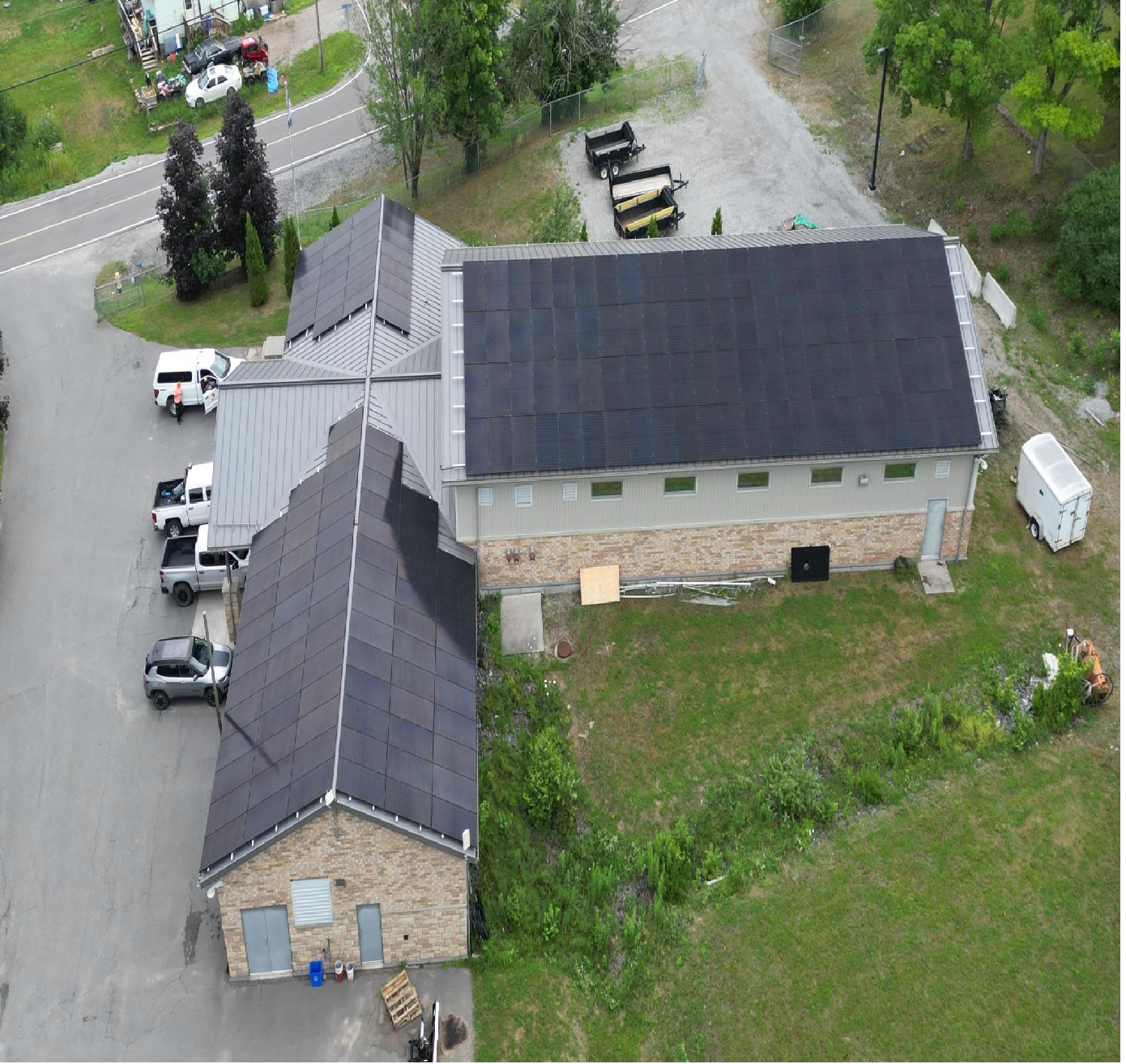
A substantial rooftop installation at a community water treatment facility.
Microinverters paired with full system monitoring.
The Whitefish River First Nation Water Treatment Plant project brings a 108-kilowatt solar installation to an important community facility. The rooftop array makes use of existing building space, integrating solar generation into the site without making the panels a separate ground-mounted feature.
It is a practical example of how a community energy project can take shape around an existing asset. From the aerial view, the installation can be seen across multiple roof sections—a tangible expression of the project’s scale.
The installed system uses APsystems QT2 microinverters. Microinverters convert the electricity generated by the solar modules into AC electricity. The QT2 is designed for three-phase solar applications and supports a distributed approach to power conversion across the array.
For a project of this size, equipment selection and system integration are important parts of the overall design. The QT2 technology is paired here with a full monitoring system, bringing generation and performance visibility together.
The installation includes full system monitoring so production can be reviewed over time. Monitoring helps make the solar system’s operation visible, offering a practical way to follow generation trends and review available performance information.
That visibility supports informed conversations about operation and maintenance. It gives the people responsible for the system a starting point for identifying questions and arranging further review when needed.
This installation illustrates Solar Associates’ focus on bringing solar technology and practical project coordination together. With 15 years in the solar industry, we help communities explore opportunities, define project requirements, and establish a clear path from planning toward delivery.
Every site has its own energy needs and practical requirements. Start with your community’s goals and the buildings or locations you are considering. We can help identify candidate projects and determine what a feasibility assessment should examine.
Discuss your community projectTechnology reference: APsystems QT2 product information.